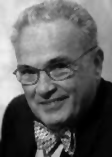
Carlos Castaneda: The Anthropologist of the Invisible
Beyond the sands of the Sonoran Desert, between the folds of the real and the unreal, stands a singular figure of 20th-century counterculture: Carlos Castaneda. An anthropologist by training, a mystic for some, an imposter for others, he remains an enigmatic bridge between scientific rigor and the mists of initiation.
A Researcher at the Frontiers
Born in Peru in 1925 and trained at the University of California, Los Angeles (UCLA), Carlos Castaneda initially presented himself as a classical anthropologist. But with the 1968 publication of The Teachings of Don Juan: A Yaqui Way of Knowledge, he blurred the lines. This first work, derived from a supposed academic thesis, recounts his encounter with Don Juan Matus, a Yaqui sorcerer from northern Mexico, and their gradual descent into a parallel universe of perception.
But who is Don Juan really? A spiritual master? A fiction? An archetype? The question has haunted academic and esoteric circles for decades. What is certain is that Castaneda has offered the world a literary corpus as powerful as it is disturbing, somewhere between an ethnographic narrative, an initiatory novel, and a metaphysical treatise.
A Desert Gnosis
At the heart of Don Juan’s teaching is the idea that ordinary reality is only one of the multiple layers of perception accessible to man. Through the ritual use of psychotropic plants (such as peyote, datura or hallucinogenic mushrooms), but also through practices of "seeing", "tracking" or "dreaming", Castaneda explores states of consciousness that Western rationality struggles to conceive.
According to the cosmology transmitted by Don Juan, the human being is a "luminous egg" traversed by infinity. The warrior, the one who follows the "way of the nagual," must unlearn his conditioned vision of the world to access a radical freedom: that of being a traveler of the unknown, a hunter of energy, a ferryman between worlds.
In this desert gnosis, everything becomes symbolic: the wind, death, animals, dreams. Discipline becomes the tool for an inner transmutation: "The path of the warrior is a path of the heart," says Don Juan.
A Subterranean and Lasting Influence
While most academic anthropologists have rejected the veracity of his stories, this in no way prevented Castaneda from becoming a cultural phenomenon. In the 1970s, his books were bestsellers. He inspires the New Age movements, psychonauts, practitioners of neo-traditional shamanism, as well as figures such as Terence McKenna and Alejandro Jodorowsky.
Beyond the controversy over the authenticity of his sources, Castaneda poses an essential and ever-burning question: what is reality? And can we, through direct experience, reconfigure our vision of the world?
A self-effacing man, a living work of art
Mysterious until the end, Castaneda cultivated secrecy. There are no recent photos, no interviews. He disappeared in 1998, leaving behind a group of followers, a school (Tensegrity), and an intact aura of mystery. Some believe he never died, that he simply "crossed the bridge," like the seers before him.
Carlos Castaneda is perhaps not an ethnologist faithful to the criteria of modern science. But he may be something else: a catalyst of consciousness, a poet of the expanded real, a mystic disguised as a seeker.
And if Don Juan had never existed, his teachings continue to circulate. Because, ultimately, as Don Juan so aptly puts it:
"There is no path. The path is made by walking."
Books by Carlos Castaneda
The Teachings of Don Juan: A Yaqui Way of Knowledge (1968)
➤ Book based on his experiments with peyote.
A Separate Reality (1971)
➤ Further exploration of perception techniques.
Journey to Ixtlan (1972)
➤ Redefinition of his apprenticeship with Don Juan.
Tales of Power (1974)
➤ Transition to a new level of consciousness.
The Second Ring of Power (1977)
➤ Interactions with Don Juan’s other apprentices.
The Eagle’s Gift (1981)
➤ Introduction to the concept of the Eagle, a cosmic force.
The Fire from Within (1984)
➤ Advanced teachings on energy and perception.
The Power of Silence (1987)
➤ Teaching stories illustrating "sorcerer’s maneuvers."
The Art of Dreaming (1993)
➤ Exploration of "lucid dreaming" as a tool of consciousness.
The Active Side of Infinity (1998)
➤ Last work, published shortly before his death. A reflection on memory and spiritual awakening.